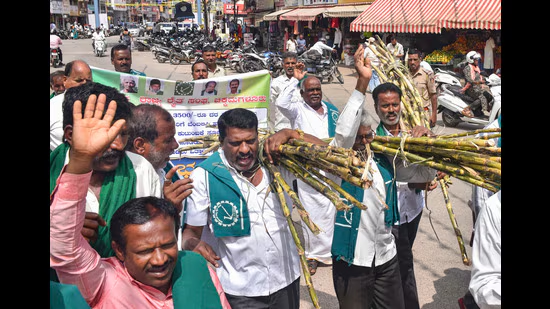

Bengaluru/Belagavi, November 2025: The Karnataka government has resolved a major standoff with its sugarcane farmers, announcing a fixed procurement price of ₹3,300 per tonne. This decision comes after nine days of intense protests in the state’s northern districts, where growers took to the streets demanding a fair and remunerative price amid escalating costs and deep rural distress.
Marathon Protests and Mounting Pressure
The agitation, which started in Belagavi, rapidly spread to surrounding regions like Bagalkote, Vijayapura, and Haveri. Thousands of farmers staged sit-ins, blocked highways, and disrupted traffic, calling attention to the rising input costs in sugarcane cultivation. Their principal demand was the setting of a minimum support price (MSP) at ₹3,500 per tonne.
Tensions grew intense midweek, with incidents of stone-pelting reported and the state sugar minister’s convoy confronted by agitated crowds. High-level negotiations ensued as statewide solidarity bandhs and widespread disruptions triggered appeals from not just farmer unions, but also pro-Kannada groups across Karnataka.
The Government’s Breakthrough Offer
After initial rounds of talks failed, Chief Minister Siddaramaiah intensified discussions, holding day-long meetings with representatives of farmer unions and sugar factory owners, including all 81 private and cooperative mills in the state.
Heeding farmers’ demands and balancing industry concerns, the government engineered a package: sugar factories would pay ₹3,250 per tonne, while the state itself would add ₹50, bringing the final price received by farmers to ₹3,300 per tonne.
The state’s solution also factors in sugar recovery rates, with earlier offers having failed due to significant dissatisfaction among growers. The price is set for cane with a recovery of 11.25%—the percentage of sugar extractable from each tonne of cane. Lesser recoveries receive proportionately reduced rates; for instance, crops yielding 10.25% recovery will fetch ₹3,000 per tonne.
A Farmer-Led Victory
For the farmer unions, the decision marks a hard-won triumph. The Karnataka Rajya Raitha Sangha and other local leaders, after days of hunger strikes and negotiations, called off their protests, declaring the government’s move as much-needed relief in a year rife with uncertainty and inflation. “The relentless protest by the farmers has yielded the desired results. As per the direction of our leaders, we are ending our struggle,” announced a union member as tents were cleared and roads reopened in Belagavi.
Price: Historic Context and Economic Impact
The newly fixed price is a notable increase from last season and comes as subsidies and input costs—fertilizers, labor, diesel—continue to rise across India. Last year, the standard procurement price in Karnataka hovered near ₹3,100–₹3,200 per tonne for comparable sugar recoveries, with lower rates sparking frequent discontent among cane cultivators. The price hike is expected to cost the state government almost ₹300 crore, an expense justified as essential for rural economic stability and vital to prevent agrarian distress.
Nationally, sugarcane prices are anchored by the Central government’s Fair and Remunerative Price (FRP), which currently stands at ₹355 per quintal (₹3,550 per tonne) for 10.25% recovery, though actual market rates and state government support packages can diverge. Karnataka’s farmers argued that even the FRP did not cover increasing cultivation costs due to adverse weather and fluctuating fertilizer prices, pressing the case for localized solutions.
Voices from the Fields: Joy, Relief, and Caution
The atmosphere was jubilant but tempered by realism. Farmer leader Shivanand Patil stated, “While we welcome the step, our input costs have skyrocketed. We urge both government and sugar factories to release payments on time and ensure procurement is transparent. Our protest has shown we will not accept injustice”.
Many farmers celebrated the outcome, but activists and policy observers cautioned against complacency, emphasizing the need for stable procurement mechanisms, timely price declarations, and further support for renewable energy and ethanol production—key alternative revenue streams for sugarcane growers.
Roadblocks and the Way Forward
The sugar sector remains vital to Karnataka’s rural economy, impacting over one million farming families, agricultural workers, and small businesses dependent on processing mills and by-products like ethanol. The current price package, though a win, is seen as the beginning, not the end, of broader reforms needed in the sector. Calls for central intervention, modernization of mills, and rationalization of export policies continue to echo through farmers’ organizations.
Additionally, sugar factory owners highlight the urgent need for better support prices for sugar and ethanol, which impact their ability to meet higher cane prices. “For sustainable solutions, both state and central governments must align pricing strategies for downstream sugar and ethanol, ensuring fair margins for every stakeholder,” said one factory association leader.
Conclusion
Karnataka’s decision to fix sugarcane procurement at ₹3,300 per tonne following sustained agitation is now being watched by other sugarcane-growing states and central policymakers. The readiness with which the government responded to farmers’ distress signals a more responsive phase in agri-policy, but sustained improvements in procurement efficiency, timely payment, and cost of cultivation adjustments remain on the agenda.
As the dust settles in Belagavi and trucks resume their journey from cane fields to sugar mills, Karnataka’s rural heartland hopes this landmark decision sets a precedent for agricultural justice and paves the way for vibrant, sustainable sugarcane farming.