
Discover everything about Wordle Today—today’s word, hints, strategies, and the cultural impact of the world’s favorite daily word puzzle that continues to unite players worldwide
🗞️ Introduction: The Global Obsession With Wordle Today
If you’ve opened your social media feed in the morning and seen colorful grids of green, yellow, and gray squares, you’ve already witnessed the quiet yet powerful global phenomenon that is Wordle Today.
What started as a simple word game created by a software engineer for his partner has evolved into a daily ritual for millions. The five-letter guessing game—now owned by The New York Times—continues to captivate people across generations, languages, and continents.
Every day, players wake up to the same question: What is the Wordle today?
And with that question comes an entire culture of guessing, sharing, competing, and connecting. In this in-depth piece, we explore the story behind Wordle today, its evolution, strategies to solve it, psychology of its addiction, and how it became the internet’s favorite morning coffee companion.
📜 The Story Behind Wordle
Wordle was created in 2021 by Josh Wardle, a software engineer from Wales, as a private word game for his partner who loved puzzles. Wardle—who had previously worked on Reddit’s collaborative art project “Place”—designed Wordle as a minimalist, ad-free experience.
He shared it with friends and family, and soon, the game spread like wildfire through social media. By early 2022, it had millions of daily players.
Recognizing its global appeal, The New York Times (NYT) acquired the game in January 2022 for a seven-figure sum. Since then, the NYT has hosted and curated the official daily Wordle.
💡 What Exactly Is Wordle?
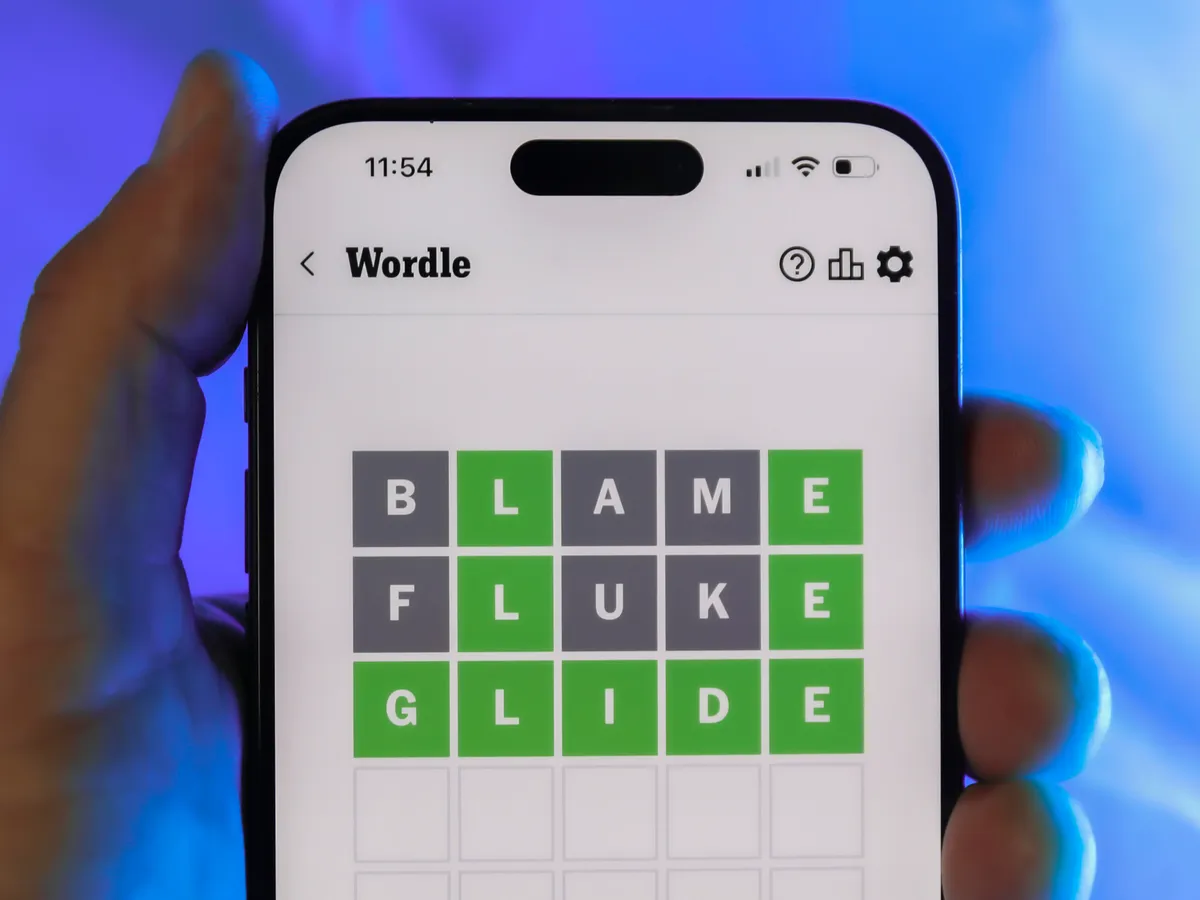
Wordle is a simple online word puzzle. Players have six tries to guess a five-letter word.
- If a letter is in the correct spot, it turns green.
- If it’s in the word but wrong spot, it turns yellow.
- If it’s not in the word at all, it stays gray.
That’s it. No timers, no ads, no penalties.
You can play once per day—the same word for everyone worldwide. This shared experience is what gives rise to the keyword “Wordle today.”
When you finish your puzzle, you can share your result using the colored grid emoji—without revealing the word itself.
🌍 Why “Wordle Today” Became a Viral Phrase
The term “Wordle Today” trends every morning across social media platforms, search engines, and forums like Reddit, X (Twitter), and Facebook groups.
Why? Because everyone wants to discuss or share hints about the current day’s word.
People search “Wordle today” to:
- Find today’s puzzle answer (often after they’ve exhausted their guesses).
- Get hints or clues before attempting.
- Compare difficulty levels with previous words.
- Discuss cultural or linguistic references tied to the word.
According to Google Trends, “Wordle today” remains one of the top daily recurring search queries globally since early 2022—an indicator of its consistent popularity.
🔍 How the Wordle Today Works
Every day, the New York Times’ algorithm selects one new word from a curated list of about 2,300 five-letter words.
These words are chosen carefully:
- They must be common enough for players to recognize.
- They should be challenging but fair.
- Slang, plurals ending in “S,” and overly obscure terms are avoided.
Each new word is released at midnight local time (based on your device clock), which is why people in different time zones start playing at slightly different times.
📅 The Routine: Wordle as a Daily Ritual
What sets Wordle apart is not just its design but its rhythm.
Unlike infinite-scroll games or social media feeds, Wordle offers just one puzzle a day. This limitation creates anticipation and scarcity—the psychological triggers that make it habit-forming.
For many, Wordle has become:
- A morning brain warm-up, like crossword puzzles once were.
- A shared family activity—parents, kids, and grandparents playing together.
- A social game—friends comparing scores daily via messages or group chats.
It’s no longer just a word puzzle; it’s a digital tradition.
🧠 The Psychology Behind Wordle’s Success
Wordle combines simplicity, constraint, and social reward in a perfect mix that appeals to the human brain.
1️⃣ The Power of Constraint
Only one puzzle per day means you can’t binge-play. This scarcity creates a sense of value for each round.
2️⃣ The Dopamine Loop
Each guess gives instant feedback, which triggers small dopamine hits. Green tiles feel like wins.
3️⃣ The Shared Challenge
Everyone faces the same puzzle, so there’s an immediate sense of connection and competition—without the toxicity of typical online games.
4️⃣ The Emotional Payoff
Solving the Wordle today, especially on your last attempt, gives a disproportionate sense of satisfaction—like cracking a code shared by millions.
🧩 Strategy: How to Win Wordle Today
For those obsessed with maintaining their Wordle streak, strategy matters.
1️⃣ Start With a Strong Starter Word
Popular starter words include:
- AUDIO – covers four vowels.
- CRANE – balanced consonant and vowel mix.
- SLATE or SOARE – common letter combinations.
2️⃣ Use Frequency Analysis
Letters like E, A, R, O, T, and N appear most frequently in English words. Avoid starting with rare letters like Q, Z, X, or J.
3️⃣ Pay Attention to Feedback
If a letter turns yellow, reposition it instead of repeating the same pattern.
4️⃣ Avoid Guessing Blindly
Every guess should maximize information. Don’t repeat confirmed gray letters unless necessary for testing placement.
5️⃣ Leverage Word Patterns
Common endings like “-ING,” “-ED,” “-EST” often appear, but beware of red herrings—NYT likes to use trickier constructions like “PLANK” or “SCOUR.”
🎨 The Social Media Grid: Wordle’s Signature Look
One of the most genius aspects of Wordle is its shareable results grid.
Players can share their daily attempt pattern—
🟩🟨⬜—without giving away the answer.
This turned Wordle into a viral meme language. Everyone on social media recognized the colored blocks instantly.
Platforms like Twitter saw a surge in posts containing these grids—often captioned with “Wordle 432 4/6” (meaning solved in 4 out of 6 tries).
This design choice fueled organic growth without paid marketing—a case study in minimalism meets virality.
📰 The New York Times Era
Since The New York Times took over Wordle, it has remained free to play on the NYT Games platform (though some fear a paywall might appear eventually).
The NYT uses Wordle as a gateway to its other puzzles—like the Mini Crossword, Spelling Bee, and Connections—expanding its gaming audience beyond traditional readers.
They have also introduced “WordleBot,” a statistical analysis tool that rates your skill level and efficiency.
WordleBot gives:
- A skill score (out of 99)
- Analysis of your choices
- “Luck” vs “Skill” breakdown
- Alternative word suggestions
This meta-layer appeals to data-driven players and keeps engagement high.
🌐 Global Influence: Wordle’s Many Clones and Spin-Offs
The success of Wordle today sparked countless variations, covering languages, pop culture, and even math.
🗣️ Language Versions
- French: Le Mot
- Spanish: Wordle ES
- Hindi: Shabdle
- Japanese: Katakana Wordle
🎬 Pop Culture Spin-Offs
- Heardle: Guess the song from audio snippets.
- Framed: Guess the movie from screenshots.
- Nerdle: Solve math equations.
- Worldle: Identify countries by their outlines.
Each follows the same Wordle logic but taps into different interests—proof that the formula works universally.
📈 The SEO Power of “Wordle Today”
From a digital-media perspective, the keyword “Wordle today” is a gold mine.
According to search-engine analytics, it garners hundreds of thousands of daily searches globally. Websites like The New York Times, The Independent, The Guardian, and GameRant publish daily posts around “Wordle today” containing:
- Hints for the current puzzle.
- The solution (with spoiler warnings).
- Background on tricky words.
For media outlets, it’s a consistent source of organic traffic. Readers return daily, creating habitual engagement.
In SEO terms, “Wordle today” functions like a daily trending keyword—its relevance refreshes every 24 hours.
🧮 Wordle Streaks and Community
Another reason Wordle has stayed in headlines is the culture of streaks.
Players proudly share their continuous days of solving Wordle—some streaks exceed 700 days since the NYT takeover.
When technical glitches occasionally reset streaks, Twitter erupts with frustration. To players, their streak isn’t just a number—it’s a record of discipline and persistence.
There are also entire online communities (like r/Wordle on Reddit) where players share theories, discuss starter words, and analyze NYT’s word-choice psychology.
🗣️ Criticisms and Challenges
While Wordle remains hugely popular, not everyone is satisfied.
1️⃣ Difficulty Variation
Some players feel certain words (like “CYNIC,” “KNOLL,” or “RUPAL”) are too obscure.
2️⃣ American vs British English
Occasional confusion arises from spelling differences (e.g., “FAVOR” vs “FAVOUR”).
3️⃣ Fear of Monetization
The NYT’s history of paywalls makes some players nervous about Wordle’s long-term free status.
4️⃣ The “Luck” Factor
Sometimes the correct word can be guessed by pure chance early on, which frustrates more strategic players.
Despite these minor complaints, Wordle’s daily audience remains robust.
📚 Educational Benefits of Playing Wordle Today
Educators and psychologists praise Wordle for its subtle cognitive benefits:
- Expands vocabulary.
- Enhances pattern recognition.
- Strengthens working memory.
- Encourages patience and logical deduction.
Teachers have even introduced classroom versions for language learning, turning “Wordle today” into a fun educational exercise.
🧭 The Future of Wordle
What lies ahead for Wordle today?
1️⃣ Integration with NYT Ecosystem
Expect tighter integration with the NYT Games subscription model, possibly bundling Wordle with other puzzles under one premium tier.
2️⃣ Personalized Wordles
AI-generated or difficulty-based Wordles tailored to individual skill levels.
3️⃣ Social & Multiplayer Modes
Team Wordles or timed competitions could bring new energy to the format.
4️⃣ Global Wordle Championships
Don’t be surprised if official tournaments emerge—complete with leaderboards and live streaming.
Whatever its next evolution, Wordle’s essence—simplicity and connection—will likely remain untouched.
🧾 Conclusion: Why “Wordle Today” Still Matters
Three years after its creation, Wordle remains more than just a game—it’s a shared cultural moment. Every morning, millions of people type those same five boxes, chase the same colors, and share the same tiny victories.
In an era of overwhelming digital noise, Wordle today offers something rare: quiet focus, communal joy, and intellectual play.
So the next time you open your browser and search for “Wordle today,” remember—you’re not just solving a word. You’re part of a global conversation that connects minds, one letter at a time.